
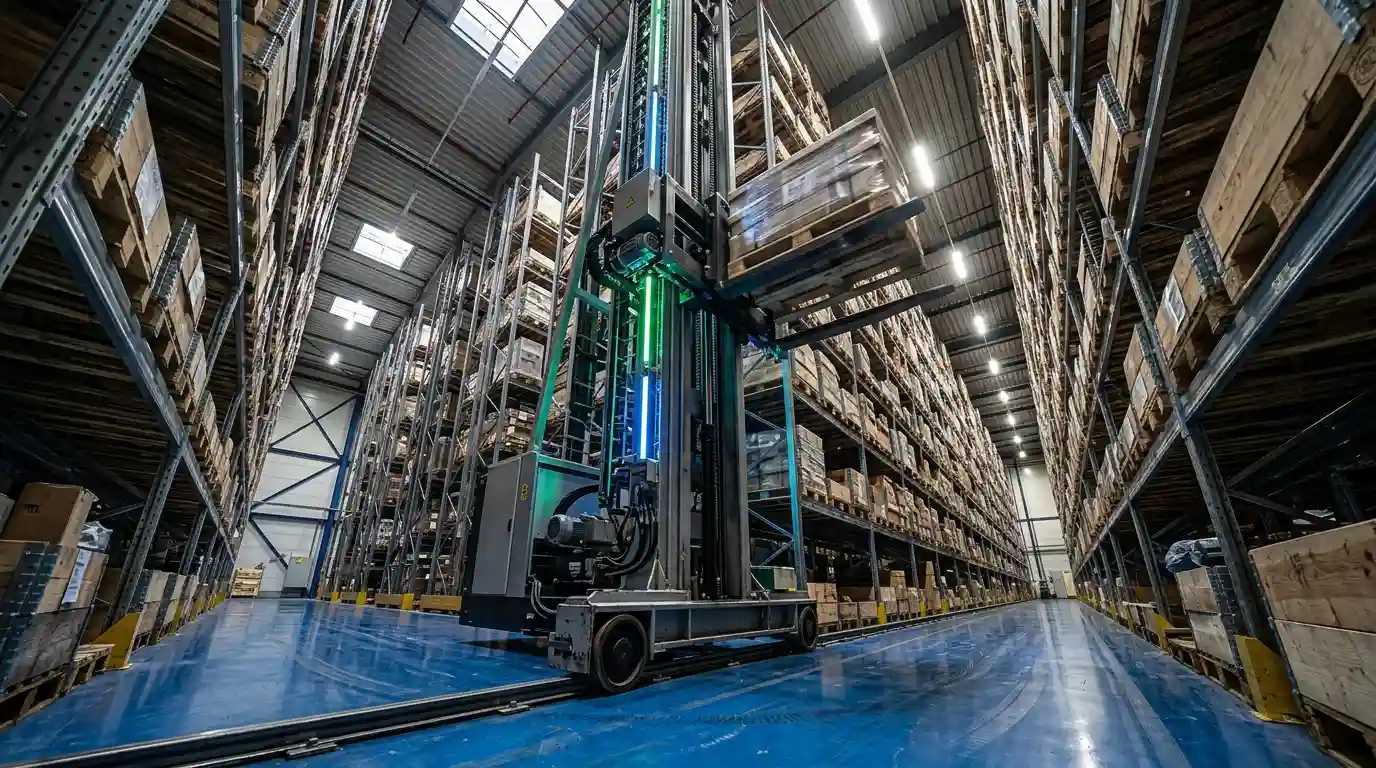
العمود الفقري لأنظمة التخزين الآلي مرتفع المدى
في التخزين الصناعي ذي الارتفاعات الفائقة، يؤدي الاعتماد على الرافعات الشوكية اليدوية التقليدية إلى خلق اختناقات تشغيلية مباشرة: قيود قاسية على الارتفاع، ارتفاع خطر تلف الأرفف، وانخفاض سرعة التداول. يُحَوِّل تطبيق رافعات التخزين الرأسية الأرفف العالية القياسية إلى بيئة تخزين رأسية آلية قادرة على الوصول إلى ارتفاعات تتجاوز 30 متراً بدقة رقمية مطلقة.
إن دمج رافعة التخزين الآلي في منظومتك اللوجستية يعالج التحديات التشغيلية الحرجة عن طريق تعظيم استغلال المساحة الحجمية الرأسية والقضاء على أخطاء المناولة اليدوية للمواد. بالنسبة لمدراء اللوجستيات وهندسة المصانع الذين يدرسون أتمتة المستودعات، فإن فهم الهندسة التقنية، ديناميكيات التشغيل، والتكلفة الإجمالية للملكية لرافعات التخزين يُعد أمراً أساسياً قبل اختيار الشريك المصنع والمدمج للنظام.
ما هي رافعة التخزين الرأسية وكيف تعمل؟
رافعة التخزين الرأسية هي معدة تدار بالكهرباء وتتحرك على سكك حديدية مثبتة على الأرض وفي أعلى الأرفف داخل الممرات الضيقة جداً . تعمل هذه الرافعات الآلية عبر ثلاثة محاور حركة رئيسية في وقت واحد، حيث تنقل الحمولات الثقيلة بين محطات الناقلات للتدفق الداخلي/الخارجي وخانات التخزين المحددة في الأرفف.
المكونات الهندسية الأساسية
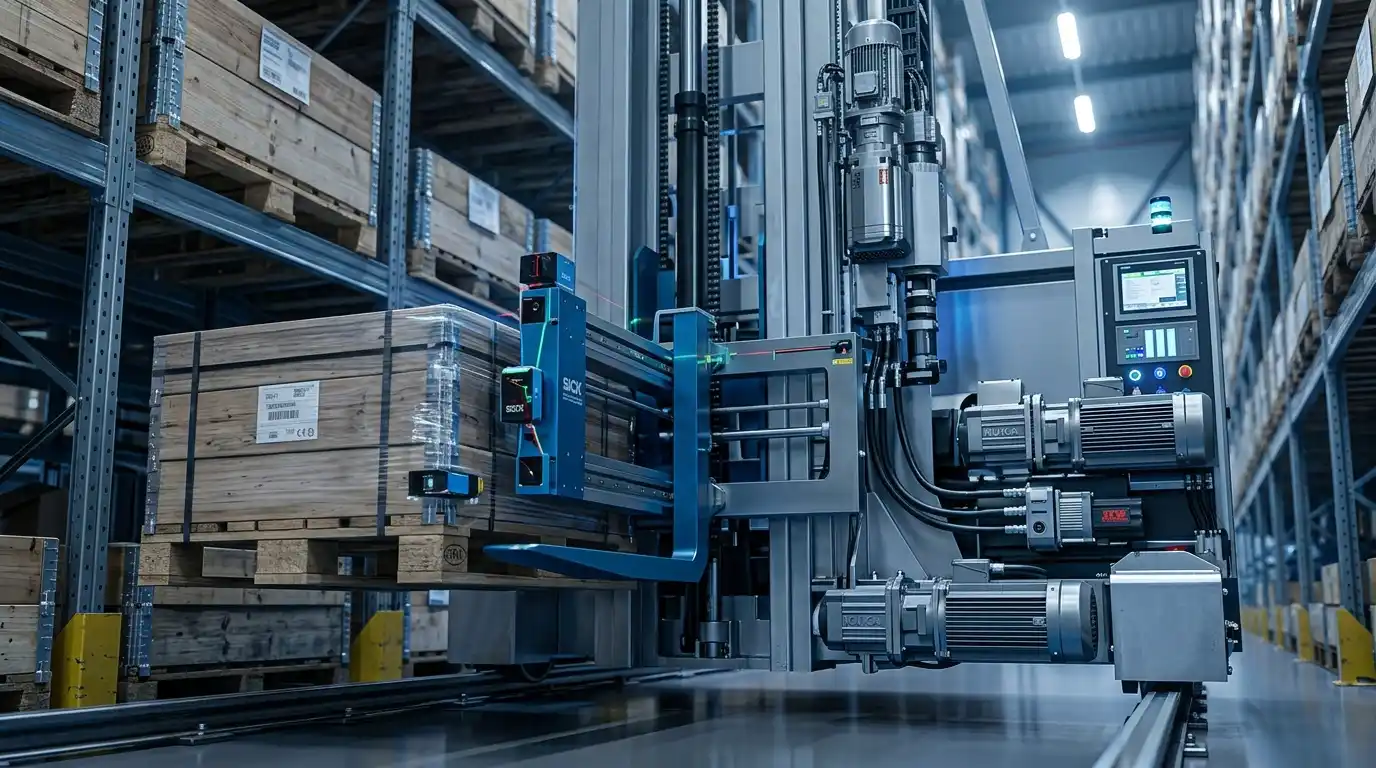
هيكل الصاري : يتم تصميمه باستخدام صاري أحادي أو مزدوج للحفاظ على الثبات الهيكلي عند الارتفاعات الشاهقة ودعم أوزان الحمولات الديناميكية.
آلية الاستخراج التلسكوبية: شوكات تلسكوبية متخصصة أو مكوك فرعي يمتد جانبياً داخل هيكل الأرفف لإيداع أو استرجاع الباليتات في وضعية أحادية أو ثنائية العمق.
محركات الدفع والرفع : محركات سيرفو توفر حركة أفقية، ورفعاً رأسياً، وتمدداً للشوكات بشكل متزامن.
لوحة التحكم (PLC) وشبكة الحساسات: أجهزة تحكم منطقية قابلة للبرمجة مدمجة مع حساسات تحديد الموقع الضوئية، وأجهزة قياس المسافة بالليزر، وقفل الأمان لضمان التموضع الدقيق بمقياس المليمتر.
الأنواع الميكانيكية لرافعات التخزين الرأسية
يعتمد اختيار التكوين الهيكلي الصحيح مباشرة على وزن الحمولة، سرعة التداول، ومتطلبات كثافة التخزين:
رافعات التخزين أحادية الصاري: مُحسّنة لحمولات الباليتات القياسية (حتى 1,500 كجم) ودورات العمل السريعة. يقدم هيكلها الخفيف تسارعاً سريعاً داخل الممرات الضيقة.
رافعات التخزين مزدوجة الصاري : رافعات للخدمات الشاقة مُصممة بهيكل صاري مزدوج للتعامل مع الارتفاعات الفائقة (حتى 45 متراً) وسعات الحمولات الثقيلة التي تتجاوز 3,000 كجم.
رافعات التخزين ثنائية العمق : مزودة بشوكات تلسكوبية ممتدة المدى، مما يسمح للرافعة بالوصول إلى عمق باليتين من ممر واحد، وهو ما يرفع كثافة التخزين الحجمية بشكل كبير.
دمج روبوتات الـ AS/RS مع أنظمة الـ WMS والـ WCS
تعتمد الروبوتات الحديثة في أنظمة التخزين والاسترجاع الآلي على العمل ضمن منظومة رقمية متزامنة تُدار عبر طبقات برمجية متكاملة، بدلاً من العمل بشكل منفصل:
المستوى 1 (إدخال الطلبات): يقوم نظام تخطيط موارد المؤسسة بإرسال تفاصيل الطلب مباشرة إلى نظام إدارة المستودعات .
المستوى 2 (الإحداثيات والأولويات): يحدد نظام إحداثيات المخزون المثالية ومستويات الأولوية، ثم يرسل هذه البيانات إلى نظام التحكم في المستودعات .
المستوى 3 (التنفيذ الحركي): يحول نظام الإحداثيات إلى إشارات لحظية للمتحكم المنطقي القابل للبرمجة لتشغيل المحركات والعتاد الصلب لرافعات التخزين والتنزيل .
التعرف على النظام: عند دخول المنصات النقالية (البالتات) إلى منطقة الاستلام، تمر عبر محطات التعرف الآلي والتقاط البيانات المزودة بماسحات الباركوود أو أجهزة قراءة لتسجيل الوزن، الأبعاد، وتفاصيل وحدة التخزين التعريفية .
توزيع نظام إدارة المستودعات : يحلل النظام توزيع الأوزان، معدلات دوران البضائع ، والأماكن المتاحة في الأرفف لتحديد الإحداثيات المستهدفة بدقة.
تنفيذ نظام التحكم : يحول النظام بيانات الإحداثيات إلى أوامر حركية متزامنة لمقود رافعة ، مما يحركها أفقياً ورأسياً في وقت واحد وفق مسارات تسارع مثالية.
التكاليف التشغيلية، الصيانة، وتحليل عائد الاستثمار
يتطلب تقييم الاستثمار في المستودعات العالية الآلية تحليل كل من النفقات الرأسمالية الأولية والنفقات التشغيلية طويلة الأجل.
مؤشرات الأداء والتحليل المالي
| معيار التكلفة والتشغيل | التشغيل التقليدي بالرافعات الشوكية | نظام رافعات |
| أقصى ارتفاع تشغيلي | 10 – 12 متراً | يصل إلى 45 متراً |
| عرض ممر التشغيل | 3.5 – 4.5 متر | 1.5 – 1.8 متر |
| متطلبات العمالة | مرتفعة (سائق لكل معدة) | حد أدنى (إشراف آلي) |
| تلف المنتجات والأرفف | احتكاك يدوي متكرر | شبه معدوم (دقة موجهة بالليزر) |
| استهلاك الطاقة | شحن مستمر للبطاريات | استرجاع الطاقة عبر الفرملة المتجددة |
| أفق عائد الاستثمار | مصاريف تشغيلية مستمرة | 2.5 – 4.5 سنة |
متطلبات الصيانة الوقائية
يتطلب الحفاظ على أقصى جاهزية تشغيلية جداول صيانة مهيكلة:
الفحوصات الشهرية: فحص سيور الدفع، نظافة الحساسات الضوئية، بكرات التوجيه، وأقفال الأمان.
الصيانة الربع سنوية: التحقق من محاذاة الصاري الهيكلي، شد السلاسل/الكابلات، وتشحيم صناديق التروس .
المراجعة السنوية: تصوير حراري كامل للوحات الكهربائية، مراجعة برمجيات الـ PLC، وتقييم تآكل السكك الحديدية الهيكلية.
اختيار مصنعي أنظمة الـ ASRS المناسبين
يُعد التعاون مع مصنعي أنظمة AS/RS من ذوي الخبرة أمراً حاسماً لنجاح المشروع على المدى الطويل. يجب على المشترين في القطاع الصناعي تقييم شركاء التجميع والتكامل وفقاً لمعايير تقنية وتشغيلية صارمة:
القدرة على التخصيص الهندسي: القدرة على تصنيع ارتفاعات صاري مخصصة، سعات حمولة للخدمات الشاقة، ومعالجات سطوح خاصة للبيئات القاسية أو مستودعات التبريد.
الدعم الفني المحلي وتوفر قطع الغيار: التوفر السريع لمهندسي الصيانة الميدانية المحليين والوصول المباشر لقطع الغيار الحرجة لتقليل أوقات التوقف غير المخطط لها.
القدرات البرمجية الشاملة : خبرة مثبتة في دمج أنظمة التحكم في المستودعات (WCS) بسلاسة مع منصات الـ WMS للمؤسسات مثل SAP أو Oracle.
إن تطبيق حلول التخزين الآلي المخصصة لتناسب معدل التدفق التشغيلي لمنشأتك يضمن استمرارية العمل على مدار 24/7، تخفيض استهلاك الطاقة، وتحقيق أعلى عائد استثماري على المدى الطويل.
الأسئلة الشائعة
ما هي الوظيفة الرئيسية لرافعة في المستودعات العالية؟
تقوم رافعة بأتمتة عمليات التخزين والاسترجاع الأفقي والرأسي للباليتات الثقيلة داخل هياكل الأرفف العالية، حيث تعمل داخل ممرات ضيقة جداً دون أي تدخل يدوي.
كيف تقلل رافعة الـ ASRS من تكاليف التشغيل؟
تخفض رافعة الـ ASRS النفقات التشغيلية (OpEx) عن طريق تعظيم استغلال المساحة الرأسية (تقليل المساحة العقارية المطلوبة)، القضاء على تلف المنتجات والأرفف الناتج عن الرافعات الشوكية اليدوية، خفض تكاليف العمالة، واستخدام تكنولوجيا استرجاع الطاقة أثناء الفرملة.
ما هي البيانات التي يجب تقديمها لمصنعي أنظمة الـ ASRS للحصول على عرض سعر؟
يجب تقديم الارتفاع الإجمالي لسقف المنشأة، قدرة تحمل البلاطة الخرسانية للأرضية، أبعاد الباليتات وأوزانها، عدد حركة الباليتات المطلوبة في الساعة (معدل التدفق)، والظروف البيئية (مثل: الحرارة العادية مقابل التبريد/التجميد).
احصل على استشارة فنية لمنشأتك
يتطلب تطوير البنية التحتية للتخزين الصناعي هندسة هيكلية دقيقة، تصنيعاً مخصصاً، وتنفيذاً برمجياً سلسًا. تقدم شركة زوايا أنظمة أرفف عالية متكاملة وحلول دمج لرافعات التخزين الرأسية الآلية المصممة وفقاً لأعلى معايير الجودة العالمية.
تواصل مع الفريق الهندسي لشركة زوايا اليوملطلب استشارة فنية، تقييم إنشائي، أو عرض سعر مباشر لمشروعك.