
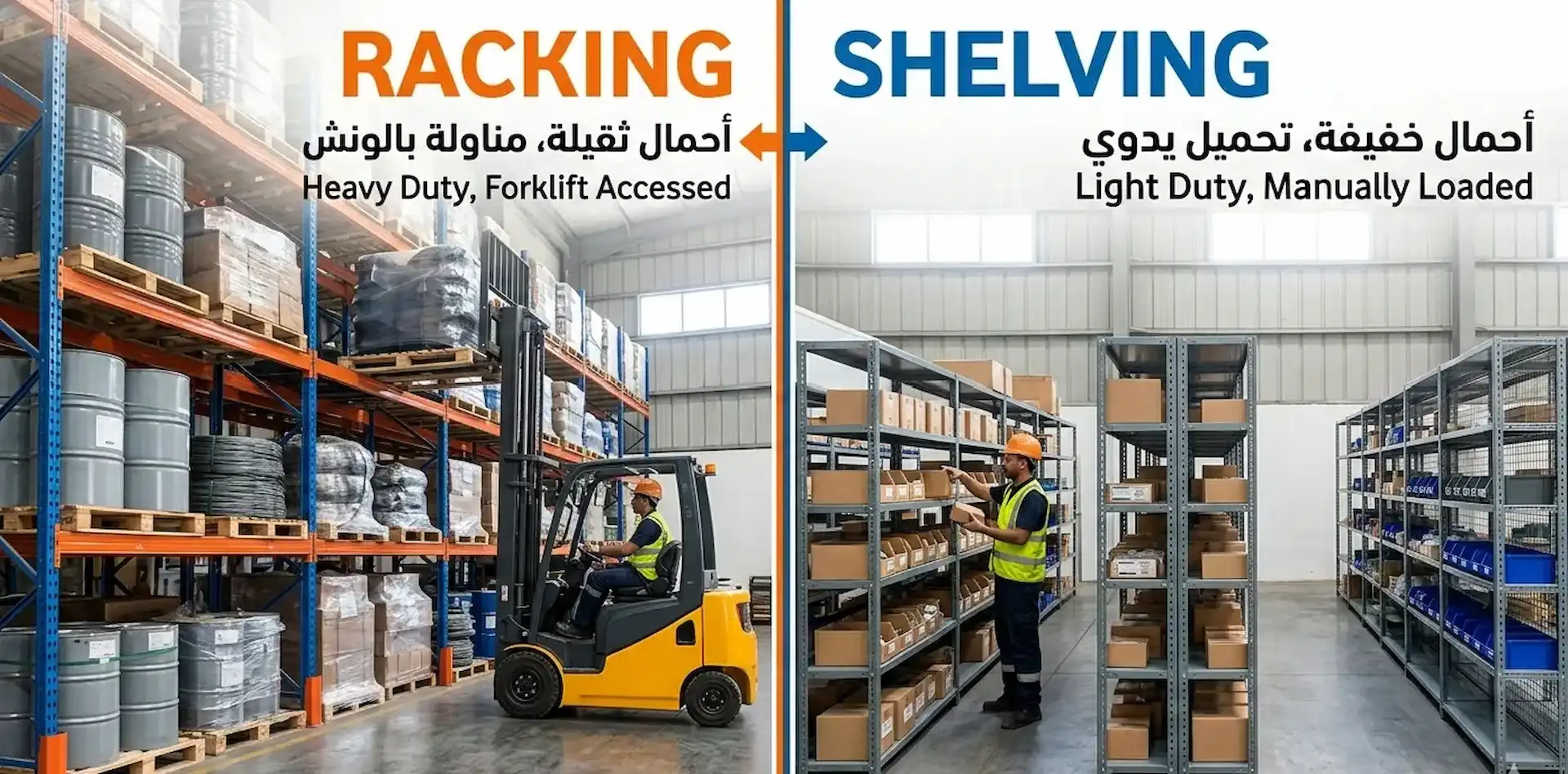
The Difference Between Shelving and Racking: How to Choose
When outfitting a warehouse or commercial space, a fundamental question arises: What is the actual difference between shelving and racking? And which one will maximize your space utilization?
Choosing the right storage solution isn’t just about organizing goods; it’s about optimizing material handling, saving time for workers and forklifts, and ensuring quick access to inventory while maintaining the highest safety standards. In the following lines, we will break down the core distinctions to help you make the right investment for your project.
Shelving vs. Racking: A Direct Comparison
To understand the practical differences, the following table provides a quick comparison of loading methods, inventory types, load capacities, and common applications.
| Feature | Racking Systems | Shelving Systems |
| Loading Method | Forklift / Mechanical | Manual / Hand-loaded |
| Inventory Type | Pallets & Bulk Loads | Cartons & Small Parts |
| Load Capacity | Heavy Duty | Light to Medium Duty |
| Common Use | Industrial Warehouses, DCs | Pharmacies, Retail, Spare Parts |
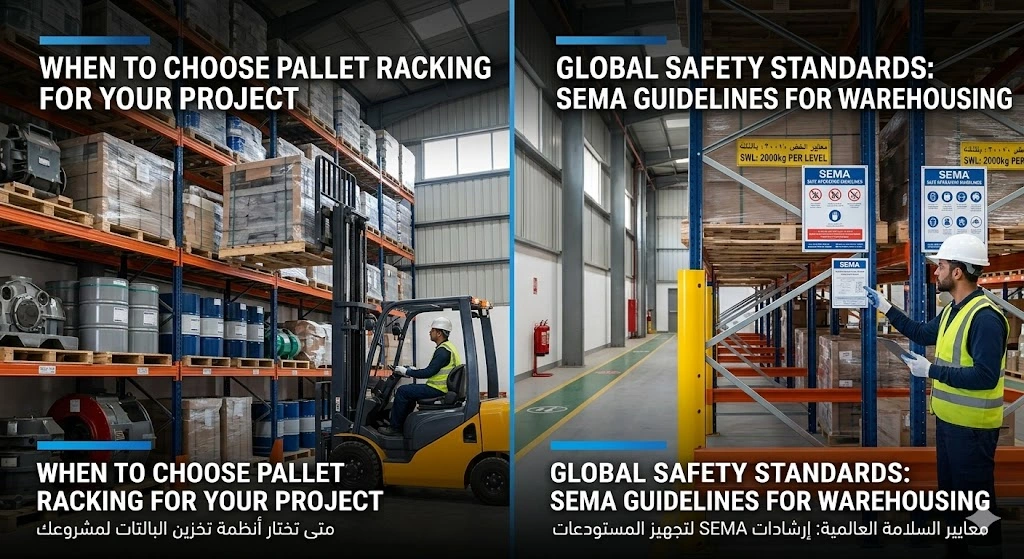
When to Choose Pallet Racking for Your Project
In professional warehouse outfitting, selecting a storage system is a strategic move that ensures maneuverability and personnel safety. Based on our experience in equipping major industrial hubs in Egypt, the most common mistake is miscalculating weight loads, leading to wasted space or structural overloading.
This is where Pallet Racking Egypt solutions stand out for heavy-duty storage. If you are storing small automotive parts, shelving is your best bet. However, for fabric rolls, construction materials, or large pallets, heavy-duty racking is indispensable, as it is engineered to support weights often exceeding one ton per level.
Choose Pallet Racking when:
-
You handle large volumes of palletized goods and need to maximize vertical cube utilization.
-
Your daily operations rely on forklifts for loading and unloading.
-
You store high-density or heavy products requiring heavy-duty beams.
-
You need a modular system that allows for future expansion or reconfiguration.
-
Your goal is to streamline inventory management and reduce operational errors.
Global Safety Standards: SEMA Guidelines and the Difference Between Shelving and Racking
When discussing warehouse safety, SEMA (Storage Equipment Manufacturers Association) guidelines are the gold standard for minimizing operational risks. Adhering to these standards is crucial, especially for Pallet Racking Egypt projects that demand strict compliance.
Key Safety Recommendations:
-
Professional Installation: Ensure systems are installed according to technical specs and conduct regular inspections of uprights for any signs of damage or buckling.
-
Weight Limits: Never exceed the Safe Working Load (SWL) specified for each beam level to prevent structural collapse.
-
Impact Protection: Use floor guards and upright protectors to mitigate damage from forklift collisions.
-
Expert Audits: Schedule periodic inspections by qualified professionals to ensure ongoing compliance with international safety codes.
-
Staff Training: Train operators on proper handling techniques and the operational differences between various storage systems.
Vertical Storage: Why Racking Excels in High-Bay Warehouses
The structural secret lies in the anatomy: Racking consists of robust uprights and heavy-duty horizontal beams, forming a skeleton capable of supporting massive weights. This differs significantly from the simple frame of a shelf.
Why Racking is the Ideal High-Bay Solution:
The “25kg Rule”: Shelving is designed for manual loads (usually under 25kg) that a worker can easily lift. Racking is engineered with load-bearing beams to accommodate pallets weighing over 1,000kg.
Maximizing Vertical Space: Racking allows for storage several meters high by anchoring uprights deep into the floor, whereas shelving is limited by human reach or basic ladders.
Decking Versatility: You can add timber or steel decking over racking beams to create wide-span manual levels. However, you must never use light shelving units for pallets, as they lack the necessary structural integrity and will fail immediately.
Structural Flexibility: Racking is a “living” system. You can easily adjust beam heights and positions to accommodate changing pallet sizes.
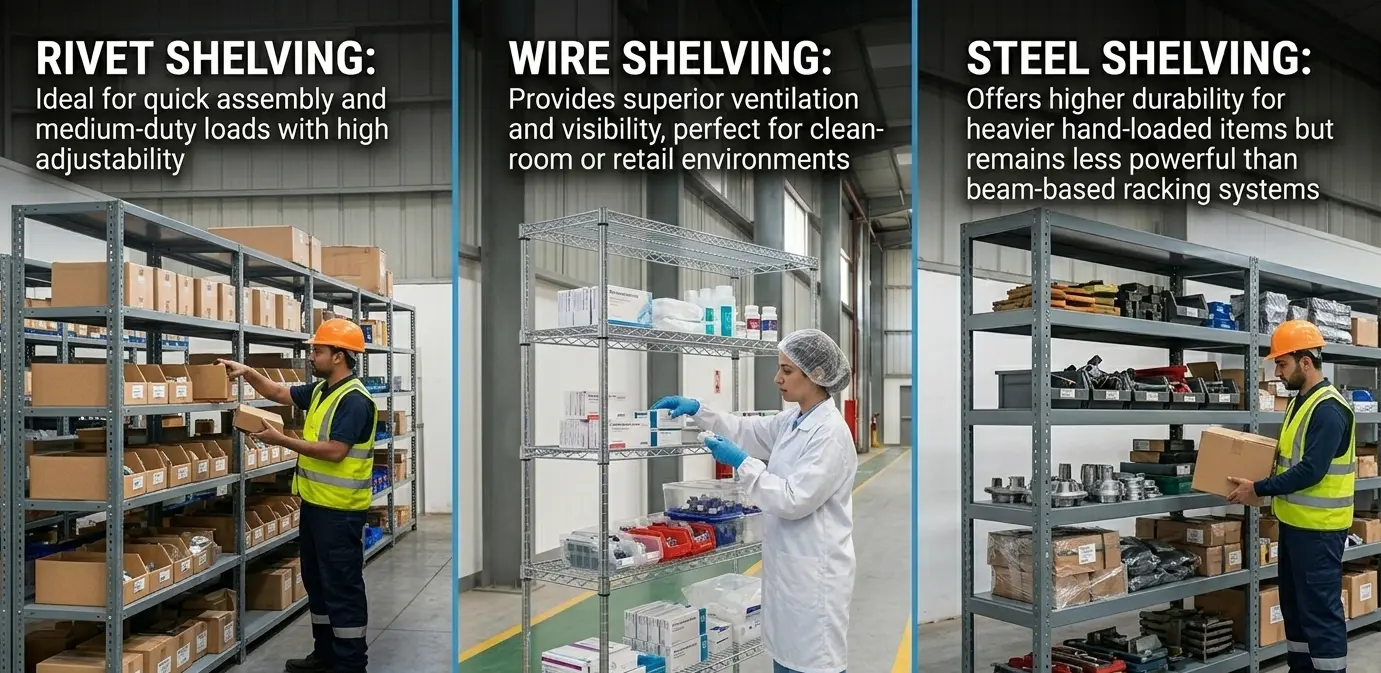
Common Shelving Types: Rivet, Wire, and Steel
If your space is limited and goods are hand-picked, shelving is the most cost-effective solution for light to medium loads where forklifts aren’t required.
Rivet Shelving: Ideal for quick assembly and medium-duty loads with high adjustability.
Wire Shelving: Provides superior ventilation and visibility, perfect for clean-room or retail environments.
Steel Shelving: Offers higher durability for heavier hand-loaded items but remains less powerful than beam-based racking systems.
Final Thought
In conclusion, understanding the difference between shelving and racking isn’t just about saving money—it defines the safety of your team and the speed of your workflow. If you’re still unsure which system offers the best ROI for your facility, the Zawaya team is ready to provide a free on-site survey and design the perfect storage layout for you.
Frequently Asked Questions
1. What is the main difference between shelving and racking?
Racking is designed for heavy-duty, palletized loads accessed by forklifts, while shelving is for light to medium-duty items loaded manually by hand.
2. When should I choose Pallet Racking over Shelving?
Choose Racking if you store large, heavy goods on pallets or need to maximize vertical warehouse height using machinery for loading.
3. Can shelving units support heavy pallets?
No. Shelving is for manual loads (typically under 25kg). Using them for pallets is unsafe and can lead to immediate structural collapse.
Still undecided on the best system for your facility? Contact Zawaya experts now for a professional site assessment and custom storage design.