
tatic vs. Dynamic Systems: Which Saves More Space?
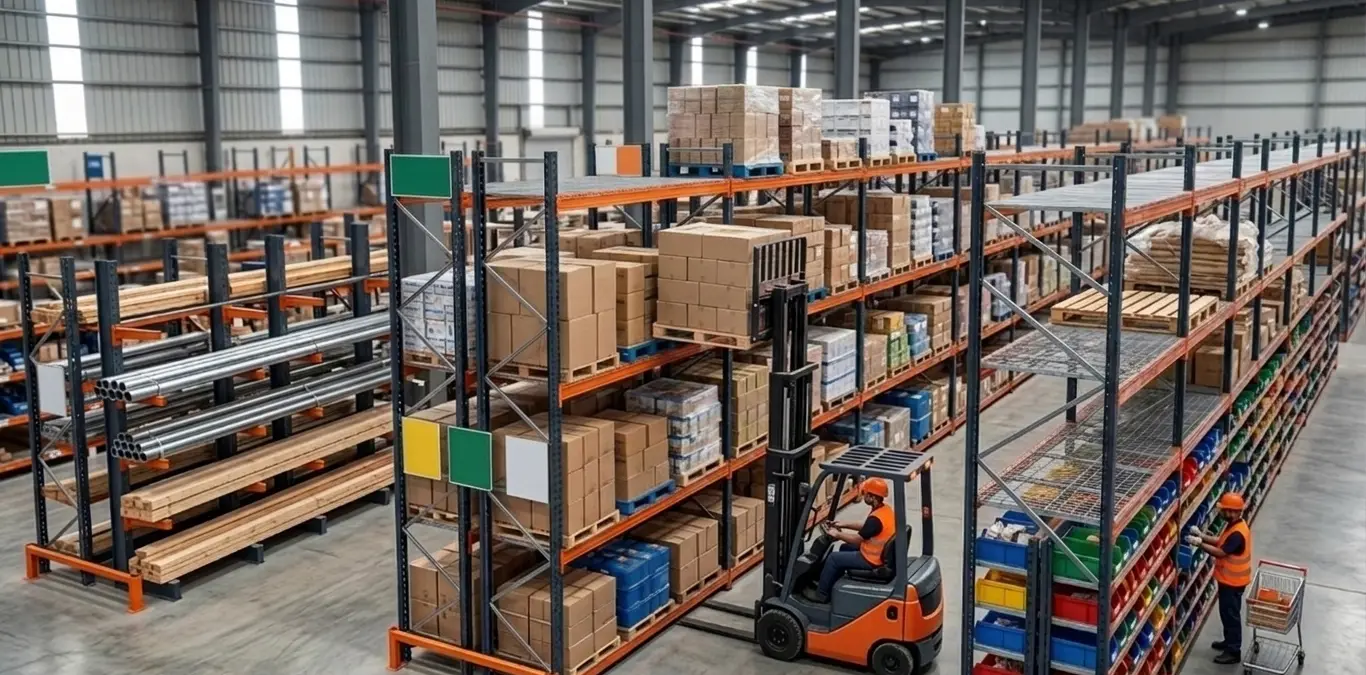
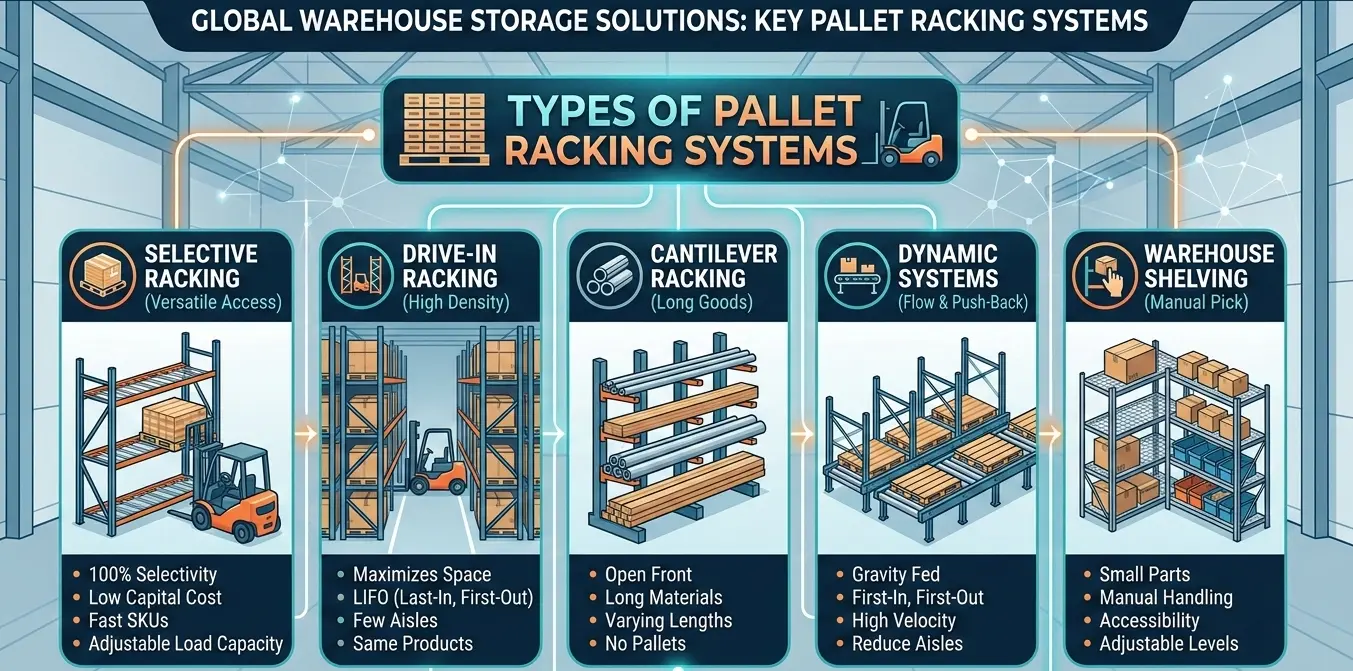
In the world of types of racking system in warehouse, we must distinguish between static and dynamic solutions. Static systems rely on traditional frames that remain fixed, making them ideal for smaller stores or inventory with a consistent arrangement.
On the other hand, dynamic systems utilize gravity-fed or motorized mechanisms to reduce aisle space and increase storage density. In large-scale projects, developers often favor dynamic types of pallet racking systems because they maximize vertical and horizontal space. The final decision depends on your SKU turnover, SKU variety, and budget.
Top-Selling Types of Pallet Racking Systems Worldwide
The types of pallet racking systems are the backbone of industrial and commercial projects globally due to their design flexibility and adjustable Load Capacity.
1. Selective Racking: The Economical & Flexible Choice
The Selective system is the most common among all types of warehouse shelving. It provides 100% direct access to every pallet. It is cost-effective, easy to install, and allows you to adjust the load capacity per level according to your specific goods.
2. Drive-In Racking: High-Density Storage for Bulk Goods
If you have limited space and high quantities of similar products, Drive-In racking is the solution. By allowing forklifts to drive directly into the lane, this system eliminates multiple aisles. However, it requires precise engineering to ensure the structure handles the cumulative vertical pressure safely.
3. Cantilever Racking: The Specialist for Long Loads
When dealing with timber, pipes, or metal sheets, standard types of warehouse storage systems won’t suffice. Cantilever racking features an open-front design with horizontal arms, providing easy handling for non-standard, long items that don’t fit on pallets.
4.Warehouse Shelving: Organizing Small Parts Manually
Not every storage need requires heavy machinery. Professional types of warehouse shelving are designed for manual picking of small to medium-sized items. These systems are essential for pharmacies, spare parts stores, and e-commerce fulfillment centers.
Steel shelving solutions offer durability and affordability. When implementing manual types of racking system in warehouse, the focus is on “Picking” speed—ensuring workers can reach products quickly without specialized equipment.
Global Safety Standards (SEMA & OSHA)
Safety is the foundation of any professional warehouse. Adhering to SEMA and OSHA standards ensures structural integrity and reduces workplace accidents.
Most rack failures aren’t due to the steel itself but result from forklift impacts. That’s why protective accessories are vital:
-
Column Protectors: Guard the uprights from forklift collisions.
-
Wire Decks: Provide extra support for pallets and prevent smaller items from falling, while improving airflow and fire safety (sprinkler penetration).