
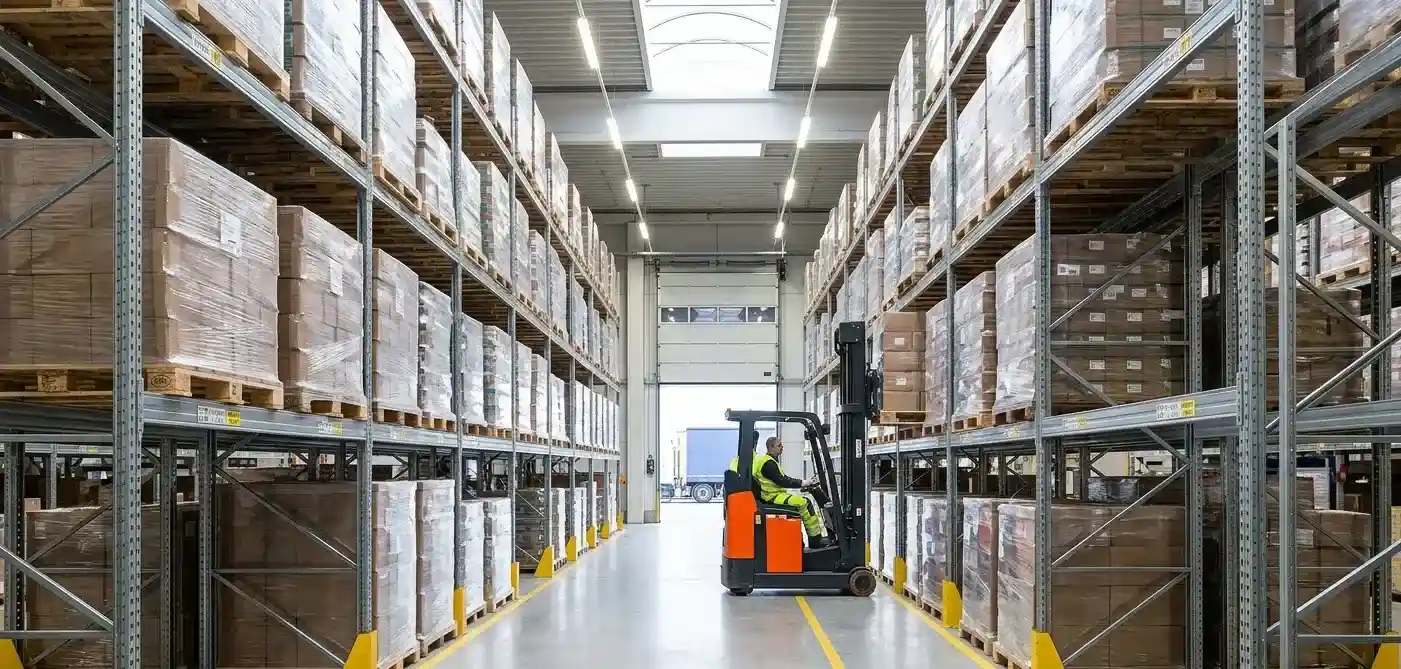
Why Does Success Start with a Professional Warehouse Racking System Design?
In today’s fast-paced logistics world, a professional Warehouse Racking System Design is no longer a luxury—it is a strategic necessity. Random planning leads to wasted space and safety hazards. To ensure seamless operations and high ROI, your planning must be rooted in engineering and operational excellence.
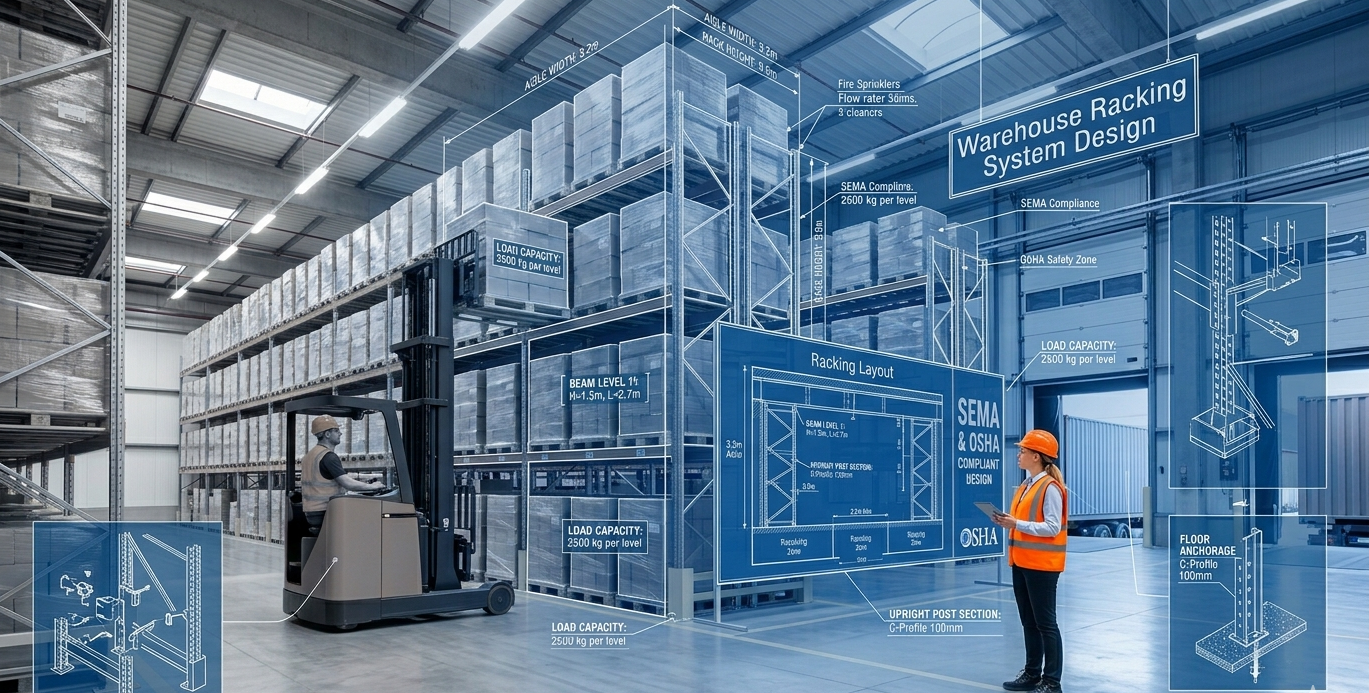
The “Racking Layout” is the blueprint of your success. A well-executed design determines:
-
The optimal distribution of storage systems.
-
Aisle Width precision for machinery.
-
Efficient receiving and shipping zones.
-
Clear pathways for forklift traffic.
By prioritizing a meticulous layout from the start, you prevent future bottlenecks and maximize every cubic meter of your facility.
10 Critical Standards for a Successful Warehouse Racking System Design
1. Analyzing Goods and Turnover Rates
Before sketching any design, you must analyze your inventory. Are you dealing with High-flow or Low-flow products? This data dictates the type of racking system required and directly impacts the overall efficiency of the warehouse.
2. Forklift Selection and Maneuverability
The choice of material handling equipment (MHE) dictates the required aisle width. Larger forklifts require wider aisles, which may reduce storage density. A smart Warehouse Racking System Design balances equipment needs with space optimization.
3. Maximizing Clear Height
Utilizing the full vertical “Clear Height” of your building is vital. However, you must maintain safe distances below Fire Sprinklers. A professional design ensures you use vertical space without compromising safety codes.
4. Floor Flatness and Integrity
Uneven floors are a major risk factor. They affect the stability of Uprights and Horizontal Beams. High-quality floor leveling is a prerequisite for a safe and durable racking installation.
5. Choosing the Right Storage System
Your Warehouse Racking System Design should be tailored to your specific needs. Options include:
-
Selective Racking: For 100% accessibility.
-
Drive-in Racking: For high-density storage of similar products.
-
Double Deep: To increase capacity by reducing aisles.
6. Precise Load Capacity Calculation
Every beam and frame has a limit. Accurately determining the load capacity per pallet position is crucial to prevent structural failures or collapses.
7. Compliance with SEMA and OSHA Standards
Adhering to SEMA (Storage Equipment Manufacturers Association) and OSHA (Occupational Safety and Health Administration) guidelines ensures your warehouse is globally compliant and safe for all employees.
8. Balancing Density vs. Accessibility
The ultimate goal of any Warehouse Racking System Design is to find the “sweet spot” between storing as many pallets as possible and the speed at which you can access them.
9. Fire Safety and Sprinkler Clearance
You must maintain legal clearances between the top level of storage and fire suppression systems, following the specific codes used in Egypt, the Gulf (GCC), and international standards.
10. Future Scalability and Flexibility
A great design isn’t just for today. It should be flexible enough to allow for future expansions or modifications without requiring a complete overhaul of the existing layout.
How Professional Design Solves Spatial Challenges
A strategic Warehouse Racking System Design goes beyond just adding shelves. It is a comprehensive solution aimed at:
-
Reducing Handling Time: Faster picking and stowing.
-
Improving Goods Flow: Eliminating congestion.
-
Minimizing Accidents: Creating a safer environment for workers.
-
Boosting Productivity: Significantly increasing the number of pallets handled per hour.
Investing in a calculated design today saves massive operational costs in the long run.
Supporting the Supply Chain
Ultimately, Warehouse Racking System Design is the backbone of a modern supply chain. Precise planning translates to faster delivery times, higher customer satisfaction, and reduced waste. In a competitive market, relying on engineering standards and expert consultation is your gateway to sustainable growth.
Precise planning translates to faster delivery times, higher customer satisfaction, and reduced waste. In a competitive market, relying on engineering standards and expert consultation is your gateway to sustainable growth.
Optimize your operations and ensure safety—request a professional Warehouse Racking System Design consultation today.
Frequently Asked Questions
1. What is the most space-efficient Warehouse Racking System Design?
The most space-efficient design depends on your inventory type. For high-density storage with few SKUs, Drive-in or Push-back racking is ideal. However, for 100% accessibility to every pallet, a Selective Racking system is the standard choice, even if it requires more aisle space.
2. Why should I follow SEMA and OSHA standards in my Warehouse Racking System Design?
Following SEMA and OSHA standards is critical for ensuring worker safety and structural integrity. These guidelines prevent rack collapses, ensure proper load distribution, and help you avoid legal liabilities and costly operational downtime.
3. How often should a Warehouse Racking System Design be inspected?
Safety codes recommend a professional inspection at least once a year. However, internal weekly checks are vital to identify any damage to uprights or beams caused by forklifts, ensuring the racking system remains safe and functional.