
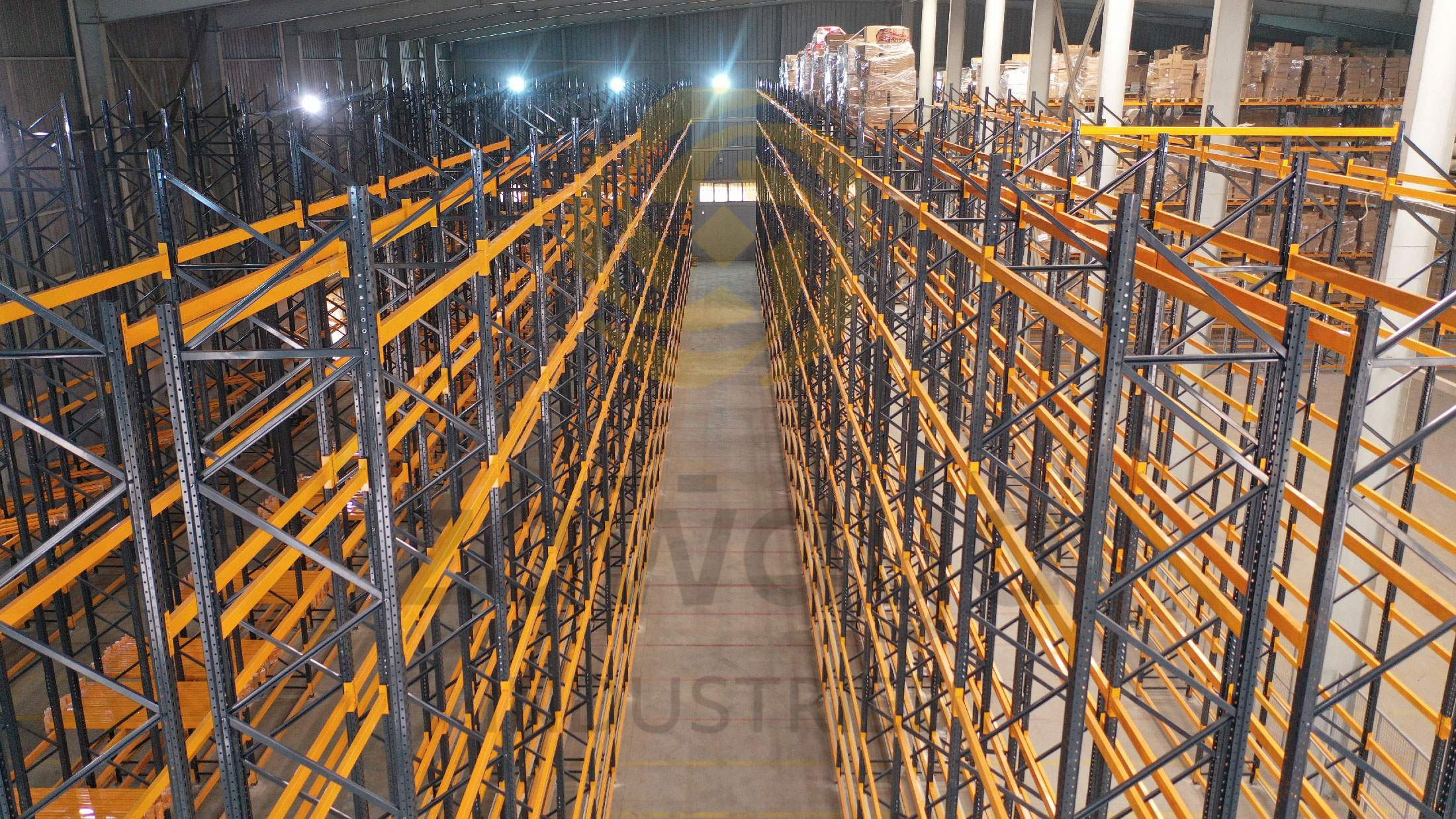
What is Pallet Racking System?
Learn what is a pallet racking system and explore its types, benefits, and how it optimizes warehouse storage efficiently. Whether you are setting up a new facility or upgrading an existing one, choosing the right warehouse racking solutions is the backbone of a productive supply chain.
In the modern logistics and industrial sector, spatial efficiency translates directly into profitability. A heavy-duty pallet racking system is a centralized material handling storage setup designed specifically to stack materials in horizontal rows across multiple vertical levels. By utilizing heavy industrial shelving structures, this system allows businesses to exploit their vertical warehouse space, converting empty air volume into secure, organized, and highly accessible storage real estate.
Implementing the correct pallet storage framework prevents ground-level clutter, minimizes product damage, and ensures that inventory flows seamlessly from receiving docks to dispatch bays.
How Does a Pallet Racking System Work?
At its core, a industrial racking framework functions by utilizing structural engineering elements to safely support heavy tons of palletized inventory. Forklifts navigate dedicated warehouse aisles to place and retrieve standard wooden, plastic, or metal pallets onto heavy-duty steel horizontal beams.
To choose the right framework for your facility, it is essential to first understand the structural difference between heavy-duty industrial configurations. While some people mistakenly look for heavy pallet shelving when dealing with mass tonnage, there is a fundamental distinction in warehouse logistics: shelving systems are designed for manual, small-item hand-picking, whereas a racking system is engineered specifically for mechanized forklift loading and heavy palletized unit loads.
To dive deeper into which setup fits your operational workflow, check out our comprehensive guide on the [difference between shelving and racking].
Core Components That Make it Possible (Anatomy of Racking)
To fully comprehend what is a pallet racking system and how it bears immense physical loads, it’s vital to look deeply at its core structural components. The mechanical integrity and weight-bearing capability of the entire configuration depend on several high-grade engineered steel parts:
-
Upright Frames (The Vertical Pillars): These are the vertical steel frameworks that determine the ultimate height of your warehouse storage. They consist of two vertical posts connected by diagonal and horizontal steel bracing to absorb structural stress.
-
Load Beams (The Horizontal Supports): The heavy horizontal steel bars that lock into the upright frames. These beams directly hold the weight of the pallets and distribute the structural load evenly across the system.
-
Wire Decking: Placed across the load beams, wire mesh decking acts as a safety shelf that prevents loose items or broken pallets from falling through the structure, while still allowing light and warehouse fire sprinkler water to pass through.
-
Row Spacers: Rigid steel components used to connect back-to-back racking rows together, keeping them perfectly aligned, stable, and structurally uniform.
-
Footplates & Shims: Heavy steel plates welded to the base of the upright frames. They are anchored directly into the concrete warehouse floor using expansion bolts. Shims are placed underneath to level the racking rows on uneven industrial floors.
-
Safety Pins / Beam Clips: Critical locking devices inserted at the connection points where load beams meet upright frames, preventing forklifts from accidentally lifting and dislodging the beams during operation.
The physical quality, gauge thickness, and manufacturing grade of the steel used in these exact components directly determine the system’s overall weight capacity, structural integrity, and long-term durability under heavy stress.
The Top 5 Benefits of Industrial Palletizing
Palletising goods for industrial storage provides several massive operational advantages. It enhances efficiency, organization, and safety in warehouse operations across all supply chain sectors.
-
Streamlined Loading and Unloading Times: Mechanized forklift operations can locate, retrieve, and move standard unit loads much faster than manual labor picking single items off floor levels.
-
Efficient Use of Warehouse Space: By verticalizing your floor layout, you can compact bulk goods upward, drastically multiplying your total cubic storage capacity.
-
Improved Safety During Transport and Storage: Securing products tightly on stable pallets and storing them within rigid steel structures minimizes manual handling drops and warehouse workplace injuries.
-
Greater Flexibility in Handling and Transportation: Standardized pallet sizes allow unified handling across global logistics networks, shipping containers, and transport trucks.
-
Better Stock and Inventory Management: Warehouses achieve real-time tracking accuracy, clear visibility of SKUs, and much faster cycle counting procedures.
-
Reduced Handling, Transportation, and Storage Costs: Maximizing current warehouse capacity saves businesses from paying expensive rent on additional external logistics facilities.
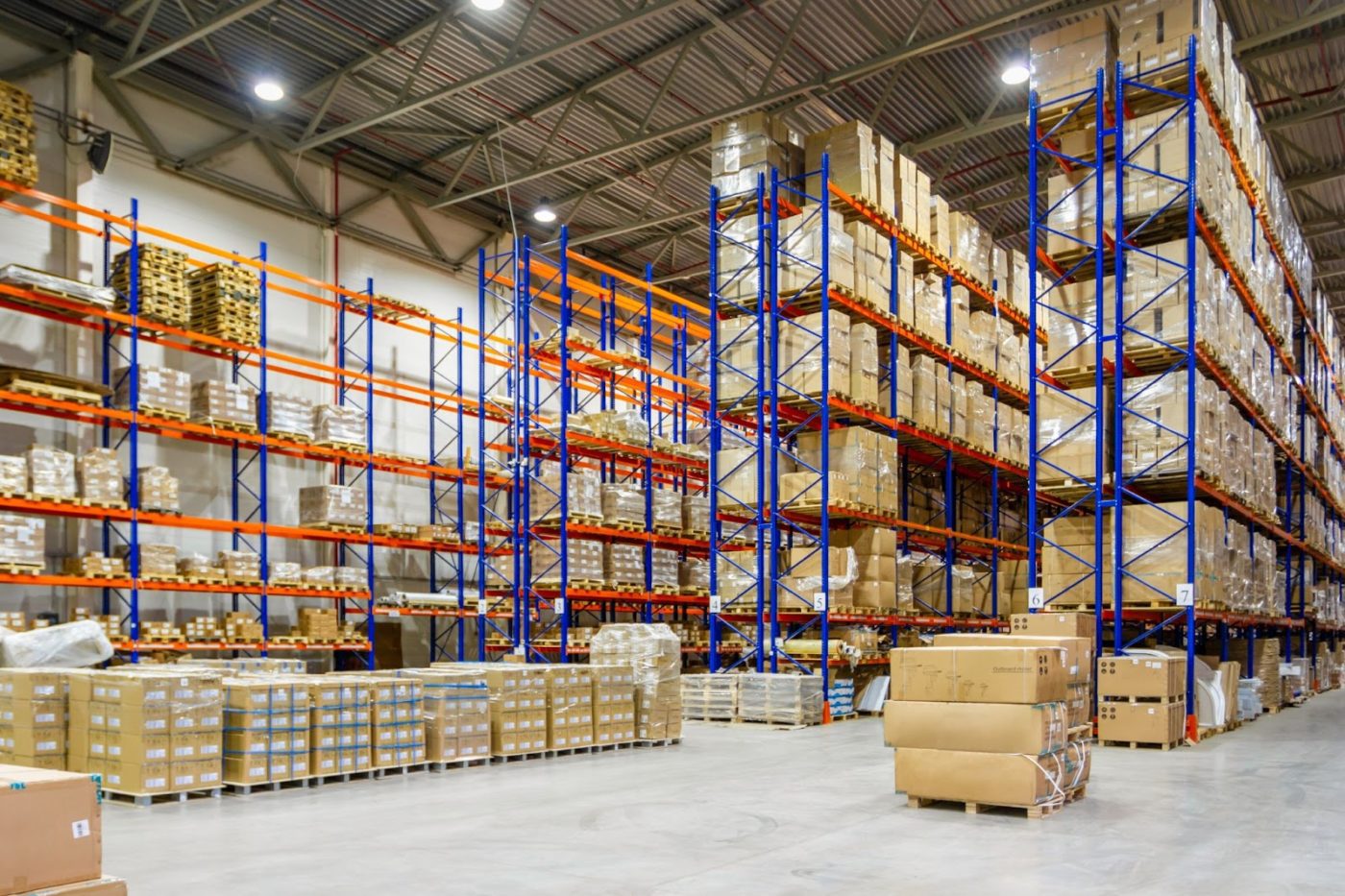
Choosing Between Selective and Compact Pallet Storage Systems
When selecting an industrial pallet racking system, it’s essential to evaluate three major variables: your total available warehouse floor space, required individual pallet accessibility, and your core inventory turnover rate. Generally, specialized engineered solutions fall into two main strategic design categories:
1. Selective Storage Systems
These layouts are designed to provide absolute 100% direct access to every single pallet position at any given moment. Forklifts can pick any individual pallet without needing to move neighboring stock. This configuration is perfect for distribution hubs handling a massive variety of different SKUs with fast-moving inventory turnover.
2. Compact Storage Systems
These layouts prioritize maximum storage density over individual accessibility by condensing storage rows and eliminating multiple forklift aisles. Compact systems utilize deeper lanes to stack matching goods tightly together, which is highly efficient for bulk, low-variety inventory.
Companies must carefully assess their specific operational priorities — whether they need to maximize every single square meter of available space or ensure lightning-fast, unhindered access to diverse goods. Factors such as exact product shelf life, stock rotation frequency, and daily inventory management needs play a critical role in this structural selection process.
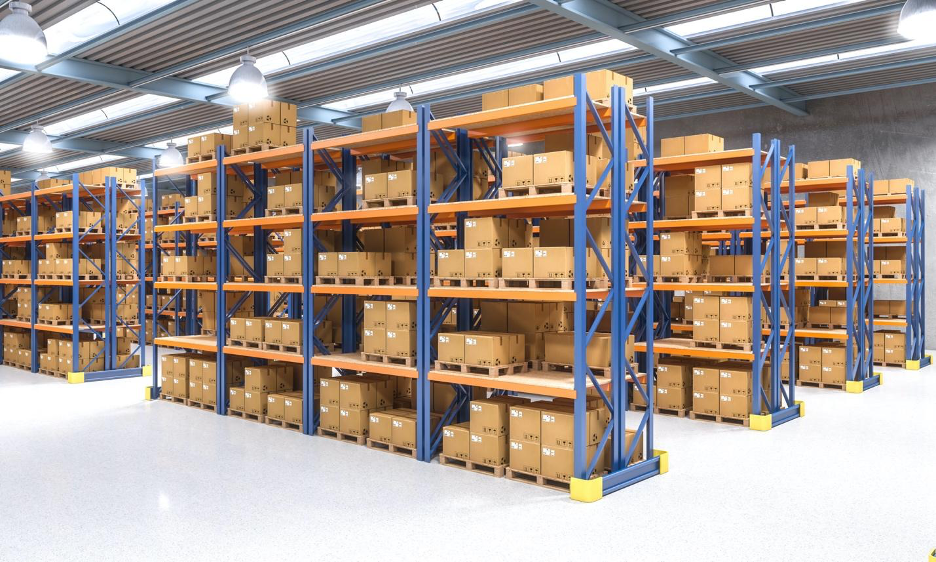
Common Types of Pallet Racking Systems and Their Uses
Specialized warehouse racking companies design different physical systems to suit various warehouse layouts, storage weights, and inventory turnover rates. Below are the most common industrial types, each requiring specific Material Handling Equipment (like Reach Trucks, Counterbalance Forklifts, or specialized narrow-aisle trucks) for optimal, safe operation.
Adjustable Pallet Racking
This is the standard worldwide configuration offering direct access to all pallets. It is recognized as the most flexible, easily adjusted option available, but it requires wide floor space to accommodate traditional forklift turning aisles. It remains the best pallet racking for small warehouses that operate with limited budgets and high product diversification, as it does not require complex or highly specialized forklift fleets.
Very Narrow Aisle (VNA) Racking
This design maximizes storage density to extreme vertical levels by reducing the standard forklift aisle width down to the bare minimum. By compacting the aisles together, VNA systems utilize up to 90% of available warehouse volume. It requires specialized, guided VNA forklifts or articulated trucks that move safely down fixed rail or wire-guided aisle systems.
Double Deep Racking
This system boosts total storage capacity by storing pallets two-deep inside a single rack face. It effectively eliminates every second forklift aisle, making it an excellent choice for high-volume items that feature medium inventory turnover. It requires a specialized deep-reach forklift fitted with telescopic forks to access the secondary rear pallet position.
Drive-In & Drive-Through Racking
These are high-density, compact pallet storage systems where forklifts physically drive inside the structural steel bays to deposit or retrieve inventory. It is an ideal layout for large quantities of the exact same SKU. Drive-In systems use a LIFO (Last-In, First-Out) inventory rotation, whereas Drive-Through configurations allow access from both sides to facilitate a FIFO (First-In, First-Out) operational model.
Looking for deep technical breakdowns? For a complete comparison of alternative setups like dynamic gravity-fed lanes or push-back options, read our specialized guide on the [Technical Types of Warehouse Racking Systems] to discover advanced modern options.
Comparison Between Common Pallet Racking Systems
| System Type | Space Utilization | Accessibility | Best For |
| Selective Racking | 40% | 100% (Direct Access) | High SKU variety, fast turnover |
| Double Deep | 60% | 50% | High volume, same SKU items |
| Drive-In | 85% | Low (LIFO) | Bulk storage, limited space |
| VNA (Narrow Aisle) | 90% | 100% (with VNA truck) | Massive height, premium space |
Understanding the Cost of Pallet Racking Systems
One of the most frequent questions from industrial clients is how to accurately calculate the initial capital cost of an industrial pallet racking system. There is no single fixed, flat price for these structural setups since multiple structural variables influence total manufacturing and installation costs, such as custom engineering designs, raw steel material grade, weight capacities, and regional market conditions. At Zawaya, we prioritize transparency and technical accuracy by providing realistic, localized pricing based on your exact storage requirements.
How Much Does Pallet Racking Cost?
Industrial pricing is fundamentally calculated on a “per pallet position” basis and fluctuates depending directly on the current Global Steel Index prices. To help your logistics team budget accurately, here is a quick comparative benchmark:
-
Selective Racking: Represents the lowest and most cost-effective initial financial investment per pallet position. It utilizes simpler component configurations and standard steel grades.
-
High-Density Systems (Drive-In/VNA/Push-Back): These systems cost approximately 20% to 40% more per individual pallet position due to reinforced structural engineering and precision manufacturing. However, they save up to 50% on long-term warehouse real estate footprints, balancing out the initial asset cost.
Top 3 Factors Driving the System Cost
-
Required Load Capacity: Storing heavier industrial pallets (e.g., 2 tons per pallet position) requires significantly thicker, high-gauge structural steel profiles and heavy-duty load beams, which drives up production costs.
-
System Height: Designing systems that extend above 6 meters requires heavily reinforced structural upright frames, heavy-duty floor anchoring, and extra horizontal engineering bracing to counter seismic and high-altitude tipping forces.
-
Safety Essentials & Compliance: Professional, legally compliant quotes include mandatory physical safety accessories such as heavy-duty steel Column Protectors, end-of-row guardrails, and certified LARC (Load Application and Rack Configuration) Safety Drawings to meet strict local municipal building and engineering codes.
In Conclusion
Choosing the right heavy-duty pallet racking system is a vital, long-term infrastructure investment that directly affects both operational safety and daily productivity inside your facility. By carefully balancing space utilization needs against individual pallet accessibility, businesses can deploy warehouse racking solutions that protect inventory assets while accelerating supply chain velocity.
Frequently Asked Questions about What is Pallet Racking System
1. What is a pallet racking system used for?
A pallet racking system is designed to organize and store goods on pallets efficiently, making loading, unloading, and inventory management faster and safer in warehouses and logistics centers.
2. What are the main types of pallet racking systems?
The main types include Adjustable Pallet Racking, Very Narrow Aisle (VNA) Racking, Double Deep Racking, Drive-In & Drive-Through Racking, Live Storage (FIFO), Push-Back Racking, and Mobile Pallet Racking. Each type offers different benefits depending on space, accessibility, and stock turnover.
3. How is the cost of a pallet racking system determined?
Cost depends on several factors such as load capacity, system height, material type, warehouse layout, and compliance with safety standards. Consulting a supplier ensures accurate pricing based on your specific storage requirements.
How often should pallet racking be inspected for safety?
According to international standards, a visual inspection should be done weekly, and a professional structural audit at least once a year to ensure warehouse safety.
What is Pallet Racking System?
Learn what is a pallet racking system and explore its types, benefits, and how it optimizes warehouse storage efficiently. Whether you are setting up a new facility or upgrading an existing one, choosing the right warehouse racking solutions is the backbone of a productive supply chain.
In the modern logistics and industrial sector, spatial efficiency translates directly into profitability. A heavy-duty pallet racking system is a centralized material handling storage setup designed specifically to stack materials in horizontal rows across multiple vertical levels. By utilizing heavy industrial shelving structures, this system allows businesses to exploit their vertical warehouse space, converting empty air volume into secure, organized, and highly accessible storage real estate.
Implementing the correct pallet storage framework prevents ground-level clutter, minimizes product damage, and ensures that inventory flows seamlessly from receiving docks to dispatch bays.
How Does a Pallet Racking System Work?
At its core, a industrial racking framework functions by utilizing structural engineering elements to safely support heavy tons of palletized inventory. Forklifts navigate dedicated warehouse aisles to place and retrieve standard wooden, plastic, or metal pallets onto heavy-duty steel horizontal beams.
To choose the right framework for your facility, it is essential to first understand the structural difference between heavy-duty industrial configurations. While some people mistakenly look for heavy pallet shelving when dealing with mass tonnage, there is a fundamental distinction in warehouse logistics: shelving systems are designed for manual, small-item hand-picking, whereas a racking system is engineered specifically for mechanized forklift loading and heavy palletized unit loads.
Core Components That Make it Possible (Anatomy of Racking)
To fully comprehend what is a pallet racking system and how it bears immense physical loads, it’s vital to look deeply at its core structural components. The mechanical integrity and weight-bearing capability of the entire configuration depend on several high-grade engineered steel parts:
-
Upright Frames (The Vertical Pillars): These are the vertical steel frameworks that determine the ultimate height of your warehouse storage. They consist of two vertical posts connected by diagonal and horizontal steel bracing to absorb structural stress.
-
Load Beams (The Horizontal Supports): The heavy horizontal steel bars that lock into the upright frames. These beams directly hold the weight of the pallets and distribute the structural load evenly across the system.
-
Wire Decking: Placed across the load beams, wire mesh decking acts as a safety shelf that prevents loose items or broken pallets from falling through the structure, while still allowing light and warehouse fire sprinkler water to pass through.
-
Row Spacers: Rigid steel components used to connect back-to-back racking rows together, keeping them perfectly aligned, stable, and structurally uniform.
-
Footplates & Shims: Heavy steel plates welded to the base of the upright frames. They are anchored directly into the concrete warehouse floor using expansion bolts. Shims are placed underneath to level the racking rows on uneven industrial floors.
-
Safety Pins / Beam Clips: Critical locking devices inserted at the connection points where load beams meet upright frames, preventing forklifts from accidentally lifting and dislodging the beams during operation.
The physical quality, gauge thickness, and manufacturing grade of the steel used in these exact components directly determine the system’s overall weight capacity, structural integrity, and long-term durability under heavy stress.
The Top 5 Benefits of Industrial Palletizing
Palletising goods for industrial storage provides several massive operational advantages. It enhances efficiency, organization, and safety in warehouse operations across all supply chain sectors.
-
Streamlined Loading and Unloading Times: Mechanized forklift operations can locate, retrieve, and move standard unit loads much faster than manual labor picking single items off floor levels.
-
Efficient Use of Warehouse Space: By verticalizing your floor layout, you can compact bulk goods upward, drastically multiplying your total cubic storage capacity.
-
Improved Safety During Transport and Storage: Securing products tightly on stable pallets and storing them within rigid steel structures minimizes manual handling drops and warehouse workplace injuries.
-
Greater Flexibility in Handling and Transportation: Standardized pallet sizes allow unified handling across global logistics networks, shipping containers, and transport trucks.
-
Better Stock and Inventory Management: Warehouses achieve real-time tracking accuracy, clear visibility of SKUs, and much faster cycle counting procedures.
-
Reduced Handling, Transportation, and Storage Costs: Maximizing current warehouse capacity saves businesses from paying expensive rent on additional external logistics facilities.
Choosing Between Selective and Compact Pallet Storage Systems
When selecting an industrial pallet racking system, it’s essential to evaluate three major variables: your total available warehouse floor space, required individual pallet accessibility, and your core inventory turnover rate. Generally, specialized engineered solutions fall into two main strategic design categories:
1. Selective Storage Systems
These layouts are designed to provide absolute 100% direct access to every single pallet position at any given moment. Forklifts can pick any individual pallet without needing to move neighboring stock. This configuration is perfect for distribution hubs handling a massive variety of different SKUs with fast-moving inventory turnover.
2. Compact Storage Systems
These layouts prioritize maximum storage density over individual accessibility by condensing storage rows and eliminating multiple forklift aisles. Compact systems utilize deeper lanes to stack matching goods tightly together, which is highly efficient for bulk, low-variety inventory.
Companies must carefully assess their specific operational priorities — whether they need to maximize every single square meter of available space or ensure lightning-fast, unhindered access to diverse goods. Factors such as exact product shelf life, stock rotation frequency, and daily inventory management needs play a critical role in this structural selection process.
Common Types of Pallet Racking Systems and Their Uses
Specialized warehouse racking companies design different physical systems to suit various warehouse layouts, storage weights, and inventory turnover rates. Below are the most common industrial types, each requiring specific Material Handling Equipment (like Reach Trucks, Counterbalance Forklifts, or specialized narrow-aisle trucks) for optimal, safe operation.
Adjustable Pallet Racking
This is the standard worldwide configuration offering direct access to all pallets. It is recognized as the most flexible, easily adjusted option available, but it requires wide floor space to accommodate traditional forklift turning aisles. It remains the best pallet racking for small warehouses that operate with limited budgets and high product diversification, as it does not require complex or highly specialized forklift fleets.
Very Narrow Aisle (VNA) Racking
This design maximizes storage density to extreme vertical levels by reducing the standard forklift aisle width down to the bare minimum. By compacting the aisles together, VNA systems utilize up to 90% of available warehouse volume. It requires specialized, guided VNA forklifts or articulated trucks that move safely down fixed rail or wire-guided aisle systems.
Double Deep Racking
This system boosts total storage capacity by storing pallets two-deep inside a single rack face. It effectively eliminates every second forklift aisle, making it an excellent choice for high-volume items that feature medium inventory turnover. It requires a specialized deep-reach forklift fitted with telescopic forks to access the secondary rear pallet position.
Drive-In & Drive-Through Racking
These are high-density, compact pallet storage systems where forklifts physically drive inside the structural steel bays to deposit or retrieve inventory. It is an ideal layout for large quantities of the exact same SKU. Drive-In systems use a LIFO (Last-In, First-Out) inventory rotation, whereas Drive-Through configurations allow access from both sides to facilitate a FIFO (First-In, First-Out) operational model.
Looking for deep technical breakdowns? For a complete comparison of alternative setups like dynamic gravity-fed lanes or push-back options, read our specialized guide on the [Technical Types of Warehouse Racking Systems] to discover advanced modern options.
Comparison Between Common Pallet Racking Systems
| System Type | Space Utilization | Accessibility | Best For |
| Selective Racking | 40% | 100% (Direct Access) | High SKU variety, fast turnover |
| Double Deep | 60% | 50% | High volume, same SKU items |
| Drive-In | 85% | Low (LIFO) | Bulk storage, limited space |
| VNA (Narrow Aisle) | 90% | 100% (with VNA truck) | Massive height, premium space |
Understanding the Cost of Pallet Racking Systems
One of the most frequent questions from industrial clients is how to accurately calculate the initial capital cost of an industrial pallet racking system. There is no single fixed, flat price for these structural setups since multiple structural variables influence total manufacturing and installation costs, such as custom engineering designs, raw steel material grade, weight capacities, and regional market conditions. At Zawaya, we prioritize transparency and technical accuracy by providing realistic, localized pricing based on your exact storage requirements.
How Much Does Pallet Racking Cost?
Industrial pricing is fundamentally calculated on a “per pallet position” basis and fluctuates depending directly on the current Global Steel Index prices. To help your logistics team budget accurately, here is a quick comparative benchmark:
-
Selective Racking: Represents the lowest and most cost-effective initial financial investment per pallet position. It utilizes simpler component configurations and standard steel grades.
-
High-Density Systems (Drive-In/VNA/Push-Back): These systems cost approximately 20% to 40% more per individual pallet position due to reinforced structural engineering and precision manufacturing. However, they save up to 50% on long-term warehouse real estate footprints, balancing out the initial asset cost.
Top 3 Factors Driving the System Cost
-
Required Load Capacity: Storing heavier industrial pallets (e.g., 2 tons per pallet position) requires significantly thicker, high-gauge structural steel profiles and heavy-duty load beams, which drives up production costs.
-
System Height: Designing systems that extend above 6 meters requires heavily reinforced structural upright frames, heavy-duty floor anchoring, and extra horizontal engineering bracing to counter seismic and high-altitude tipping forces.
-
Safety Essentials & Compliance: Professional, legally compliant quotes include mandatory physical safety accessories such as heavy-duty steel Column Protectors, end-of-row guardrails, and certified LARC (Load Application and Rack Configuration) Safety Drawings to meet strict local municipal building and engineering codes.
In Conclusion
Choosing the right heavy-duty pallet racking system is a vital, long-term infrastructure investment that directly affects both operational safety and daily productivity inside your facility. By carefully balancing space utilization needs against individual pallet accessibility, businesses can deploy warehouse racking solutions that protect inventory assets while accelerating supply chain velocity.
Frequently Asked Questions about What is Pallet Racking System
1. What is a pallet racking system used for?
A pallet racking system is designed to organize and store goods on pallets efficiently, making loading, unloading, and inventory management faster and safer in warehouses and logistics centers.
2. What are the main types of pallet racking systems?
The main types include Adjustable Pallet Racking, Very Narrow Aisle (VNA) Racking, Double Deep Racking, Drive-In & Drive-Through Racking, Live Storage (FIFO), Push-Back Racking, and Mobile Pallet Racking. Each type offers different benefits depending on space, accessibility, and stock turnover.
3. How is the cost of a pallet racking system determined?
Cost depends on several factors such as load capacity, system height, material type, warehouse layout, and compliance with safety standards. Consulting a supplier ensures accurate pricing based on your specific storage requirements.
How often should pallet racking be inspected for safety?
According to international standards, a visual inspection should be done weekly, and a professional structural audit at least once a year to ensure warehouse safety.